3 September 2026|Anglican Church, Okohia, Mbano, Imo State
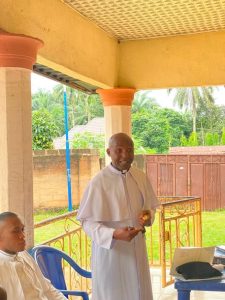
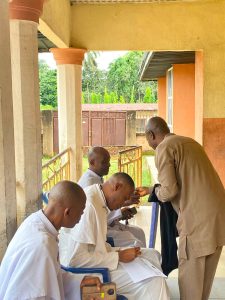
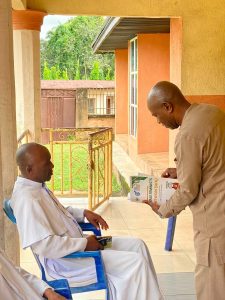
The Male Feminists Network (MFN), led by Dr. Kelechukwu Okezie, undertook a high-level advocacy visit to Venerable Barr. C. I. Elelia (PhD) of the Anglican Church, Okohia, Mbano, Imo State, on 3 September 2026. The engagement focused on critical issues including gender-based violence (GBV), feminism, gender equality, and the role of the church in shaping positive values within families and communities.
Speaking during the engagement, Dr. Kelechukwu Okezie emphasised the critical role of the church as a trusted institution for value formation and community transformation. He stressed that, given the influence of the church, GBV should be deliberately integrated into church sermons and teachings to promote awareness, prevention, accountability, and healthier relationships.
Dr. Okezie further noted that GBV is not a women’s issue alone but an issue that concerns everyone. Addressing GBV therefore requires the active participation of men, women, young people, families, faith leaders, and the wider community.
Responding to the advocacy, Venerable Barr. C. I. Elelia (PhD) appreciated the Male Feminists Network for creating an opportunity to bring the conversation on GBV to the church and the wider community.
He acknowledged that while women are often disproportionately affected by GBV, men can also experience violence and harmful gender expectations. He emphasised the importance of creating safe spaces where everyone, particularly young people, can speak out about their experiences and seek support.
“It is good that we carry this message into the hinterland. Our young people are suffering, but we must enable them to speak out.”
Venerable Elelia committed to extending the conversation to the congregation, fellow clergy, families, men, women, and young people, while affirming the church’s willingness to partner in training and awareness-raising initiatives for both men and women.
The engagement reaffirmed a shared commitment to discouraging gender-based violence, promoting gender equality, strengthening community values, and positioning the church as an active partner in GBV prevention and response.
GBV is everyone’s concern. Ending it requires everyone’s voice, commitment and action.