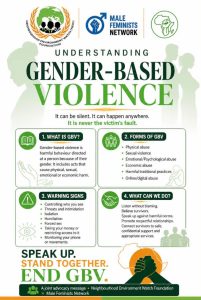
Gender-Based Violence (GBV) is not always visible. It can happen behind closed doors, within relationships, families, workplaces and communities, and increasingly in digital spaces. Sometimes, there are no bruises or obvious signs, but the impact can be deep, lasting and devastating.
GBV includes physical, sexual, emotional and psychological abuse, economic abuse, online abuse, and harmful practices that deny people their dignity, safety, freedom and rights.
Recognising the warning signs is an important step towards prevention. Control, threats, intimidation, isolation, humiliation, forced sex, financial control, and monitoring someone’s movements or communication are not expressions of love or care. They can be forms of abuse.
But ending GBV is not the responsibility of survivors alone. It is a collective responsibility.
We can make a difference by listening without blaming, believing survivors, challenging harmful gender norms, promoting healthy and respectful relationships, speaking out when we witness abuse, and connecting survivors with safe and confidential support.
Most importantly, we must create communities where people feel safe to speak, seek help and be heard. Preventing GBV requires individuals, families, communities, institutions and leaders to recognise harmful behaviours, challenge the norms that enable them, and take action to protect the dignity and rights of everyone.
Silence can allow abuse to continue. Awareness challenges it. Collective action can help end it.
Let us choose respect over control.
Let us choose equality over harmful stereotypes.
Let us choose courage over silence.
SPEAK UP. STAND TOGETHER. END GBV.
An advocacy message by Neighbourhood Environment Watch Foundation (NEW Foundation) and Male Feminists Network (MFN).
Supported by the African Centre for Leadership, Strategy & Development (Centre LSD).