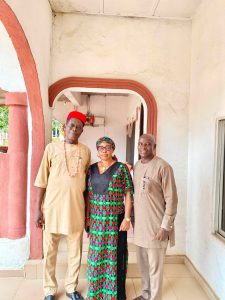
3 September 2026 | Nguru/Umuoma Autonomous Community, Imo State
Community development is strongest when local leaders are actively involved in identifying challenges and supporting solutions that improve the lives of their people.
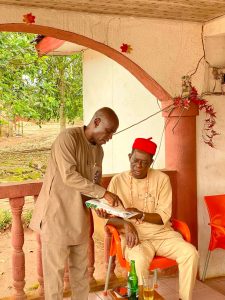
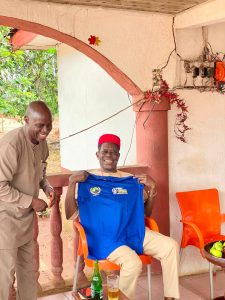
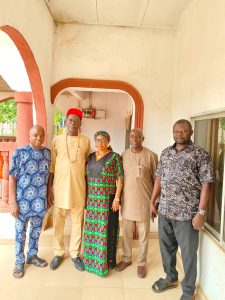
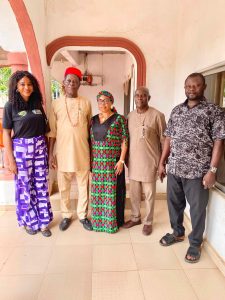
In line with this approach, the Male Feminists Network (MFN), led by Dr. Kelechukwu Okezie, undertook a high-level advocacy visit to His Royal Majesty Dr. Eme Njoku, Traditional Ruler of Nguru/Umuoma Autonomous Community, Imo State, on 3 September 2026. The engagement focused on strengthening community-level action on gender-based violence (GBV), gender equality, human rights, and positive social values.
The advocacy engagement recognised the important role of traditional institutions in influencing community values, promoting peaceful relationships, protecting vulnerable people, and supporting positive behavioural change.
His Royal Majesty received the advocacy team alongside his wife, Ugoeze Chinyere Njoku, whose presence highlighted the importance of involving both men and women in building peaceful families and inclusive communities.
A strong advocate for humanity, His Royal Majesty also brings experience from the civil society sector, giving him a valuable understanding of human rights and development. During the engagement, he expressed his commitment to supporting initiatives that promote human dignity, equality, justice, and the wellbeing of community members.
The discussion also reinforced the need to actively engage men and boys in preventing GBV. Men have an important role to play in challenging harmful social norms, speaking out against violence, supporting survivors, promoting respectful relationships, and becoming positive role models within their communities.
The advocacy engagement emphasised the importance of ensuring that conversations on GBV and gender equality do not remain at the level of policy or advocacy meetings, but are translated into community awareness, dialogue, leadership action, capacity building, and sustainable change at the grassroots.
Building safer and more inclusive communities requires strong local leadership, active participation, and collective responsibility.