20 August 2026 | Awka, Anambra State
What happens when youth leaders are given the opportunity to openly speak about the gender issues affecting their own communities? Often, it creates the space needed to question harmful norms, challenge misconceptions and begin conversations that can lead to meaningful change.
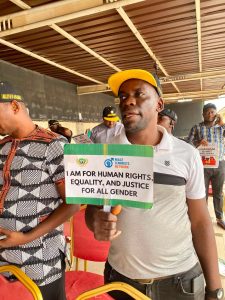
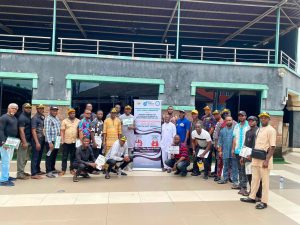
On 20 August 2026, members of the Anambra State Town Union Council Youth Wing (ASTUC Youth) in Awka, Anambra State, participated in a training on Feminism and Gender-Based Violence (GBV) as part of efforts to strengthen community responses to violence against persons.
The engagement created a space for young leaders to reflect on what feminism means beyond the misconceptions often associated with the term, and to connect the conversation to the realities experienced by women, girls and young people within their communities.
Rather than treating feminism as a distant or unfamiliar concept, the discussion explored it through the everyday principles of equality, dignity, rights and opportunities. Participants were encouraged to consider why women’s participation and empowerment should not be viewed as a threat to men, but as an important part of building stronger families and communities.
The conversation also brought the reality of Gender-Based Violence closer to home, with attention to the different forms of violence and harmful behaviours that can exist within communities. Participants reflected on how social expectations, attitudes and practices can influence relationships, limit women’s participation and create environments where violence is normalised or overlooked.
The discussion recognised that culture remains an important part of community identity, while also emphasising that practices that cause harm, promote discrimination or deny people their dignity can be examined, discussed and changed through constructive community dialogue.
For community development to be sustainable, young people must be able to participate in the conversations that shape their communities. Their knowledge of local realities, relationships and community structures gives them an important role in identifying challenges and contributing to locally relevant solutions.
When young leaders understand that women’s empowerment is not a threat, equality is not a competition, and challenging harmful practices is part of building healthier communities, they become better positioned to influence positive change within their families, peer groups and wider communities.
Community change begins with conversations, but it becomes sustainable when those conversations are carried forward by people within the community who are willing to question harmful norms, promote equality and take action.