20 August 2026 | St. Patrick’s Cathedral, Awka, Anambra State
Creating safer and more inclusive communities requires more than awareness campaigns. It requires listening to people who understand their communities, recognising existing efforts, and creating opportunities for different actors to work together towards practical solutions.
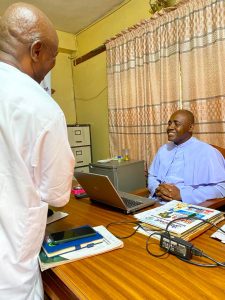
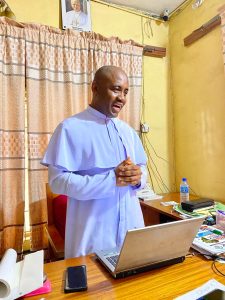
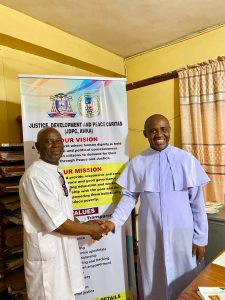
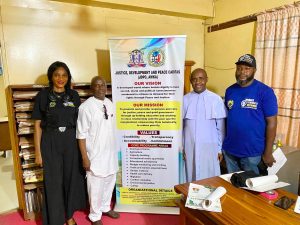
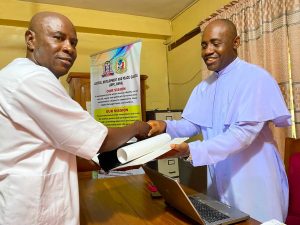
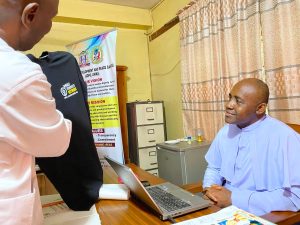
It was from this perspective that a team led by Dr. Kelechukwu Okezie paid a high-level advocacy visit to Rev. Fr. Levi Ukoh, Executive Director, Justice, Development and Peace Commission (JDPC), Awka Diocese, at St. Patrick’s Cathedral, Awka, Anambra State, on 20 August 2026. The engagement focused on strengthening teachings and conversations around Feminism and Gender-Based Violence (GBV) through an existing and trusted platform—the Church.
The meeting recognised the important place of the clergy in people’s lives and the influence of the values they communicate. Beyond their spiritual responsibilities, faith leaders are trusted voices who interact with young people, women and men and can influence conversations around behaviour, values and social norms.
During the conversation, Rev. Fr. Levi drew attention to realities within communities that require continued dialogue and collective action. He highlighted issues including the disinheritance of women and harmful widowhood practices, noting their implications for women’s rights and dignity. He also emphasised a fundamental principle: both men and women have the right to opportunities and privileges.
His reflections demonstrated that addressing gender inequality is not only about responding to violence after it occurs. It also requires communities to examine the practices, attitudes and social expectations that can create conditions where discrimination and violence persist.
Rev. Fr. Levi identified school clubs as a possible approach for creating spaces where students can learn, engage and develop healthier attitudes towards respect and non-violence. Drawing from his experience in Anambra State, he also shared his involvement in efforts to address bullying in schools, highlighting the importance of engaging young people early in conversations about dignity, respect and peaceful relationships.
For women and girls, he highlighted empowerment as an important part of reducing vulnerability to Gender-Based Violence. He further drew attention to the realities facing many men in rural communities, particularly limited employment and livelihood opportunities, and how economic pressures can contribute to vulnerabilities within families and communities.
This perspective highlights the need for community development approaches that consider both social and economic realities, rather than treating GBV as an isolated issue. Addressing harmful gender norms must go alongside efforts to strengthen livelihoods, empower vulnerable groups and create healthier community environments.
Rev. Fr. Levi also acknowledged the importance of MFN’s reach across the South-East states and expressed openness to opportunities for collaboration, partnership and continued engagement with men and young people.
The visit therefore became more than an advocacy meeting. It created a space to listen to community realities, recognise existing initiatives and identify potential pathways for collaboration. By connecting the MFN vision with trusted faith-based platforms and leaders who are already engaging with social issues, the engagement opened opportunities for gender equality and GBV prevention messages to reach wider audiences.
When faith leadership becomes part of the solution, existing community platforms can become powerful spaces for learning, reflection and action. Through continued collaboration with faith leaders, MFN can help strengthen conversations that challenge harmful norms, promote equal opportunities and contribute to safer and more inclusive communities.